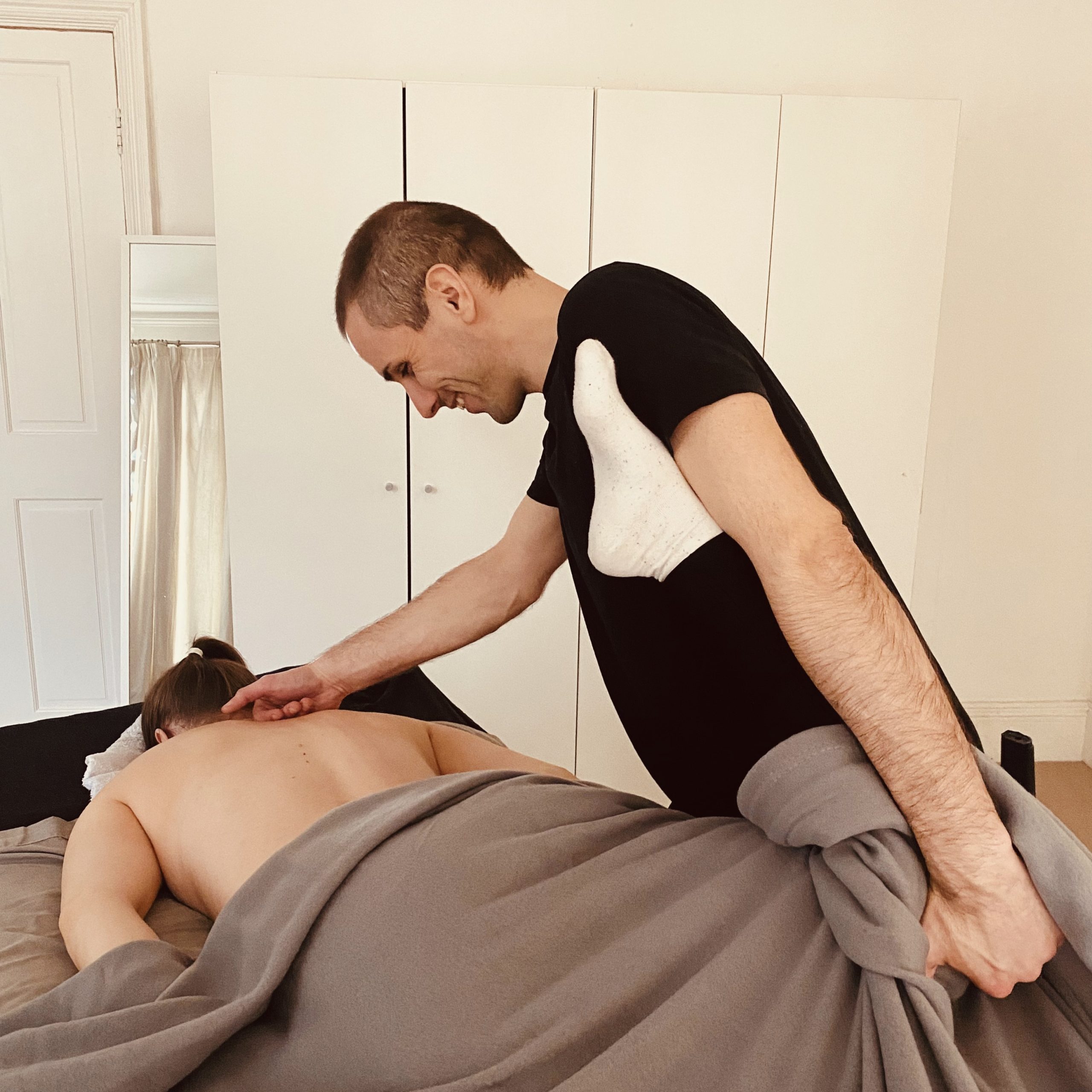
Choosing a bodywork practitioner isn’t only about certificates. How they listen, how clear their boundaries are and how your body feels around them matter just as much.
This is something I struggle with myself. Even after all these years of doing bodywork, when I need someone for my own body, I still feel unsure about who to trust. Will they judge my body? Am I wasting my money and time if it doesn’t work? But in the end, it’s two people in a room together, not only a treatment.
Having been on both sides of the table, I’ve found the difference usually isn’t the technique. It’s finding someone who gets you, and gets the way your body works. When that connection is there, the work goes deepest.
Think of a time you felt really understood by someone, and your whole body could finally breathe out, like a breath you didn’t know you’d been holding. That’s what you’re looking for in a practitioner: someone who makes letting go feel easy.
Knowledge, and then something else
Don’t get me wrong: training matters. You want someone properly qualified. But beyond a certain point, I don’t look at the certificates any more. I look at how much they care, whether they love what they do, and whether they can see the bigger picture of what’s going on with me.
When I started, I thought it was all about my techniques and being very professional. Now I know it’s much more about the two of us working together: staying humble, really connecting with the person, using my intuition and learning from them.
When the match is wrong, you only scratch the surface. Clients are often too polite to say anything, but their body tells the truth. I can feel them pulling away from my touch. Their breathing goes shallow, and they start talking to fill the space instead of relaxing.
When it’s right, something else happens. If a client trusts me and lets me get on with my work, with clear boundaries but no tight script, everything starts to flow. My hands find their way, we both breathe more easily, the body switches into rest, and the tension starts to go almost by itself.
But I’m human too. Sometimes I’ve crossed that fine line and let my mind take over, thinking I knew better than their body what it needed. Those sessions taught me humility. And when I attracted clients who didn’t share my values, it showed me I wasn’t standing by my own values either. I thought I had to massage everybody. It was never a numbers game. It’s about the right connections.
What I’ve come to understand is that, at its best, it feels like a dance. We move together, and I follow what your body needs as we go. I’m less of a fixer and more of a trusted guide, helping you get back in touch with what your body already knows.
When that happens, tension that has been stuck for years can finally start to let go. But when someone feels rushed, unheard or pushed too far, too fast, the body closes up again, and even good technique can’t reach it.
Listening, and knowing the limits
At the heart of it is listening. A good practitioner listens to more than your words. They listen to your breathing and to what your tissue is doing. That kind of attention makes the work far more effective.
Clear boundaries matter just as much. Picture a river: it flows freely because it has banks. Boundaries don’t limit the work; they’re what make it feel safe. And a good practitioner knows where their work stops, and when to send you to someone else, like your GP or physio. They know they’re not miracle workers.
How do you choose the right practitioner?
Pay attention to the first contact. Do they take the time to hear what you’re worried about? Do they explain things clearly, without big promises? And most of all, how does your body feel around them? That gut feeling is rarely wrong.
The more honest you are with yourself, the easier it is to recognise who’s right for you. You’re not looking for the best practitioner in the world, just the right one for you, right now: someone who can meet you where you are, and walk beside you from there.
Ask friends who they see. Read the reviews and notice what people actually describe rather than the stars. Look at practitioners’ websites to get a feel for how they work. Then, after all the research, listen to that quiet voice inside.
And after your first session, check in with your body the next morning. Not just whether it hurts less, but how you feel in yourself. Lighter? Calmer? Or a bit braced? Your body usually answers that question before your mind does.
If you’re wondering whether I might be the right fit, I’m happy to talk about what you’re looking for. You can also read what to expect in your first session before you decide.