There are so many kinds of bodywork out there. I’ve heard about a lot of them, and I’m sure there are plenty I’ve never come across. So I’ll stick to the ones I’ve actually trained in and worked with, and what each one showed me.
My first real sense of how deep this work can go came from being a client myself, in my tai chi teacher’s treatment room. That showed me bodywork could be much more than rubbing muscles. But it was learning Raynor Massage, and how to work with emotional release, that finally gave me a practical way to do it.
What I’ve always been looking for is something holistic, effective and practical: a way of working with body and mind together that suits each person, without floating off into theory.
That matters, because bodies respond in very different ways. One person’s body changes completely with the lightest touch. Another needs deep, focused work before anything moves. Most of the time, things shift when I let go of what I expect and listen to what the body is doing.
If you’re curious where all of this comes from, I’ve written about the history behind bodywork too. Here, though, I’ll stay with my own hands.
The methods I work with
What I didn’t expect was how each new method would change what I thought I already knew.
Raynor Massage
When I went on the Raynor Massage course, they told us to forget everything we knew about massage and open our minds. It was good advice. After years in the massage world, it’s still the most effective and practical approach I’ve come across. Every move has a purpose, and it sees the person as a holistic being. The aim is as simple as it gets: find tension and get rid of it.
It taught me that tension runs through the body along bands, often starting a long way from where it hurts. A neck can be held from the belly. A shoulder can be held from the fingers. With deep breathing and patient work, you can follow it back to where it starts.
One-to-one with Bronson
What really opened it up for me wasn’t the group course. It was the one-to-one sessions with Bronson afterwards, online. Somehow that direct attention, even through a screen, reached things the group setting couldn’t. What was happening beneath the physical tension? Working with him began to answer that.
I started to understand emotional release, and how much the breath matters. I remember using some of these techniques with a client when she started to cry. She talked, and I knew she’d been going through a lot lately. Working on those points let her feel for herself how much of it was sitting in her body.
That moment, when someone feels it for themselves, with someone beside them working slowly and letting them explore, is one of the things I value most in this work.
Each method I learned after that added to the others rather than replacing them. Each one gave me a different angle on the same thing: a body trying to find its way back to ease.
Bowen technique
What really surprised me was how much gentle work can do. Coming from my medical massage training in Hungary, and from Raynor Massage, which can go very deep, Bowen was a shock.
I used to think deeper pressure always meant better results. That’s what we’re often taught, isn’t it? Then I used a Bowen technique on someone’s feet, only holding two points, barely touching, and the client said he could feel his neck releasing. It was as if his system had been waiting for someone to whisper instead of shout. Sometimes the lightest touch does the most.
It also matters because not everyone is ready for deep work. If someone feels cut off from their body, or has been through a lot, strong pressure can be too much. Gentle work lets them start somewhere that feels safe.
Lomi Lomi
I’ve only learned some of the techniques, but what I love about them are the long, continuous strokes. They have a rhythm, like a meditative dance, or waves washing over sand, and the nervous system seems to settle into it.
A client once said something like, “The way you move my body while you’re pressing the points is so relaxing. I relax while the tension goes.”
I see people find their way back to themselves through that rhythm, especially when stress feels like it’s everywhere and nowhere in particular.
Indian head massage
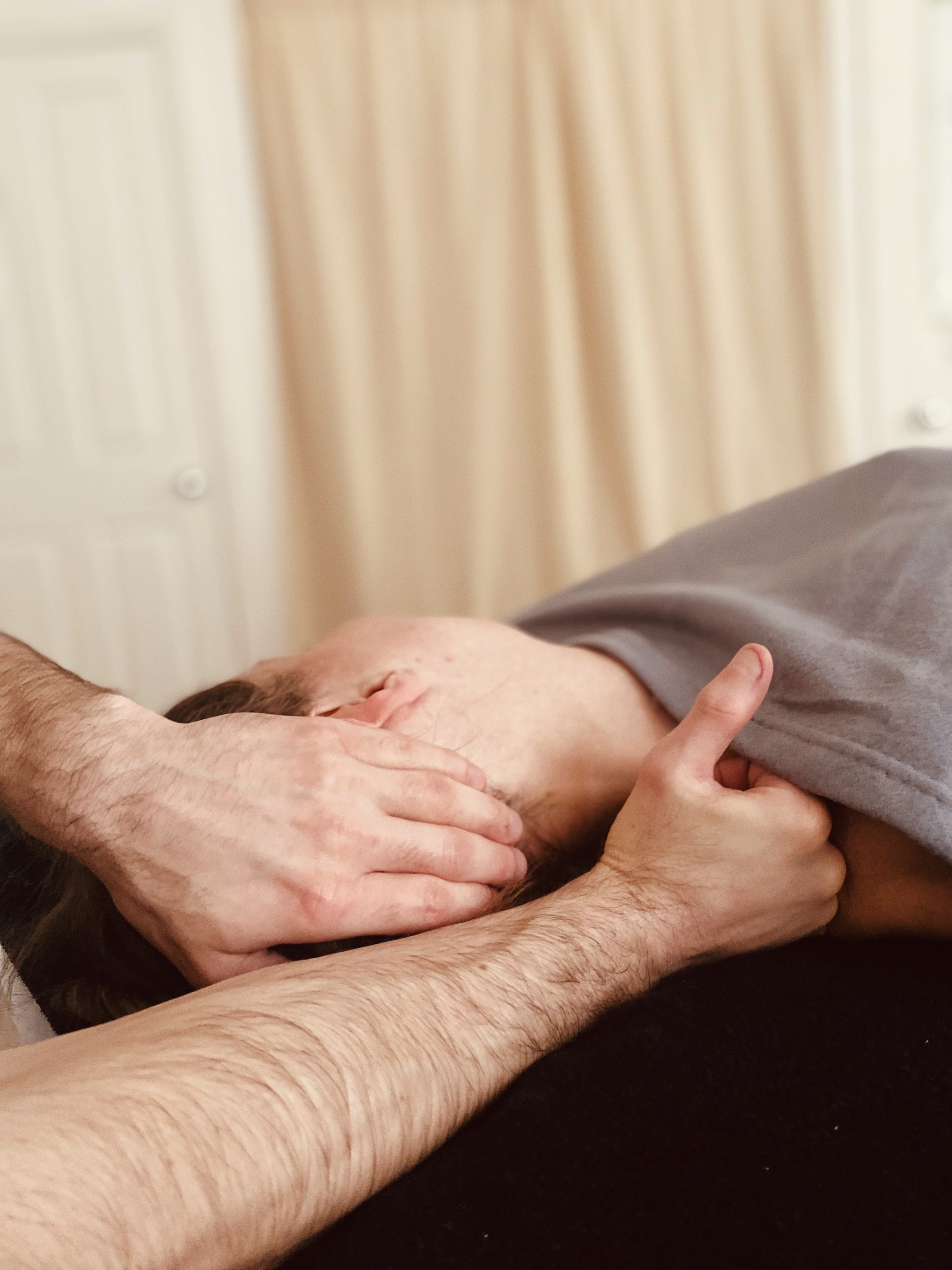
We spend so much of our lives in our heads, thinking and planning, and then there’s the rest of modern life: screens, phones, driving, typing. It all ends up in the shoulders, the neck, the head and the jaw. A massage that knows the points around the head goes deeper than you’d expect.
Sometimes when I work on someone’s jaw, emotion comes up. It can feel as if the jaw has been holding on to things that never got said. Head massage often takes a treatment somewhere quieter, almost spiritual, and even anxious, stressed clients can become calm and present.
Reflexology
Reflexology keeps surprising me. I work only on someone’s feet and feel the rest of their body let go. It can bring quick reactions, too: clients often need the loo during the treatment or straight afterwards.
There are different theories behind it. For me, it’s mainly about the relaxation response and the nervous system.
Myofascial work
Myofascial work shows me how connected the layers of the body are. I love the feeling of fascia releasing under my hands while I simply wait, and then feeling other parts of the body let go as well. With a long stretch, people often find they can move in ways they’d stopped expecting.
One of the most interesting connections to feel is between the shoulders and the hips. The lines cross, so the left hip goes to the right shoulder, and the right hip to the left. Feeling that connection, and then feeling it release, is a great moment.
Trigger point work
Trigger points showed me how many places one ache can come from. Take tension around the head. Sometimes working the arms does it. Other times it’s the jaw, or the neck. And sometimes I press a point in the calf and feel the toes let go.
I love showing clients these connections on their own body, so they can feel for themselves how a point in one place links to the ache somewhere else.
Deep tissue massage
Over the years, deep tissue taught me that depth isn’t about force. Deep doesn’t mean hard. It means reaching the layer where the tension actually is. And the change that lasts comes from understanding the tension, not from overpowering it.
Sports massage
Sports massage taught me how much our different lifestyles shape the body. Repeating the same thing, whether it’s training or just daily habits, leaves patterns you can feel in the tissue, the posture and the way someone moves.
For me its real value is knowing how to work around an injury, how to get a body ready before an event, and how to work with it afterwards.
Working with athletes opened something else, too. They’re often more connected to their bodies and less reactive, so I can go further with stretches and pressure points. The same ideas, adapted gently, help people who don’t train at all.
Thai table massage
When I was learning Thai massage, the stretches were my favourite part. Movement and touch together wake the body up in a way pressure alone can’t. It’s as if the body suddenly remembers how to move.
Thai massage is usually done on a mat on the floor. Bringing the stretches to the massage table makes them available to more people.
Starting at the feet draws energy down from the head, so people arrive in their bodies right from the start.
Holistic pulsing
I often use holistic pulsing near the end of a session to tie everything together. It’s rhythmical rocking of the whole body that lets everything that has just happened settle. It’s a soft landing after the deeper work.
It’s another reminder that soft work can reach a long way. I once had a client who wanted a gentle session, and the slow rocking helped them settle into themselves completely. Maybe it’s because we were all rocked as babies, and the body still connects it with safety. In the way most of us live now, that kind of looking after is something we hardly ever give ourselves.
Gua sha and cupping
Most of the time my hands are enough. But sometimes they can’t quite reach what’s there, and that’s when tools help.
I use a gua sha tool when a muscle needs firm work but an elbow would be too sharp. It smooths through the layers. Cupping works the other way round, lifting instead of pressing, which can do a lot for tight, heavy muscles. And when I can’t work directly on an injured spot, cupping around it is a gentler way in. Sometimes it’s about coming at the body from a different angle.
Beyond the techniques
The mind plays a big part in all of this. What you expect, your ideas about massage, what’s happened to you before: it all comes into the room with you. So every session depends on how you are, in body and mind, on that day.
I once worked with a man whose body had become badly twisted from injuries and operations. He already knew his body well and started every morning releasing tension just so he could move properly. Finding common ground with him, trying new things while respecting what he already knew, and listening very closely to how his tissue responded challenged everything I thought I knew. It made me realise how much there still is to learn through my hands.
Every body has its own way of letting go, and learning to read it takes patience. We always start where you feel comfortable, and go from there as your body responds.